Every DFW facility manager we talk to has the same experience with commercial garage doors: everything works until it suddenly doesn't, and then a $4,000 unplanned repair shuts down a loading dock for a shift. Preventive maintenance is supposed to fix that pattern — but most PM programs are either a check-the-box lube-and-walk visit that catches nothing, or over-spec'd luxury maintenance you don't need. The right program sits in between, and it pays for itself inside the first year.
This is what an actual useful commercial garage door PM program looks like in DFW — what to inspect, how often, what to document, and the per-door cost math that makes it worth doing.
Why PM Pays: The Unplanned Repair Multiplier
A planned service visit on a commercial garage door is roughly 60–90 minutes of tech time, with the door scheduled out of production for the duration. An unplanned emergency repair — same door, same part, same parts cost — typically runs 2.5 to 4 times the labor cost because of after-hours dispatch, rush parts procurement, and the production downtime cost of the door being out of service unexpectedly.
Typical DFW commercial door numbers:
- Planned spring replacement during business hours: $450–$850
- Same spring broken at 6 a.m. on a Saturday with trucks waiting at the dock: $1,200–$2,400 (emergency dispatch premium, plus downtime cost)
- Planned roller replacement set: $350–$600
- Same rollers failing catastrophically with the door off track at 2 a.m.: $1,800–$3,500 (plus panel damage from the off-track fall)
- Planned opener motor rebuild: $500–$900
- Same opener failing dead with door stuck fully closed during shift start: $1,200–$2,200 plus production delay
The avoided-cost math is why a $350 annual PM visit routinely returns 3x to 10x its cost in avoided emergencies on an active-use commercial door.
Cycle Ratings Decide Your PM Cadence
Commercial garage doors are built to a cycle rating — the number of open/close cycles the spring system is engineered for. Cycle rating drives everything about maintenance frequency.
| Door class | Typical cycle rating | Spring life at DFW cycle count |
|---|---|---|
| Standard residential (2" sectional) | 10,000–15,000 cycles | 7–10 years |
| Light commercial (2–3" insulated sectional) | 15,000–25,000 cycles | 4–7 years at 15 cycles/day |
| Standard commercial (3" insulated, 20-gauge pan) | 50,000 cycles | 7–10 years at 15 cycles/day |
| Heavy-duty commercial / dock doors | 100,000+ cycles | 10+ years at 25 cycles/day |
| Rolling steel service door (standard) | 20,000–50,000 cycles | Depends on counterbalance |
| High-speed roll-up (Rytec Spiral, Rapid Roll) | 500,000–1,000,000 cycles | Years to decades — different wear profile |
A dock door cycling 30 times per shift (3 shifts per day = 90 cycles) hits 32,850 cycles per year — a 50,000-cycle rated door is burning through spring life in ~18 months. Either spec a 100,000-cycle door at install or plan on spring replacement every 18–24 months as a PM line item.
The single most important PM question for a commercial door is “how many cycles does this door run per day?” If nobody at the facility knows, there's an $18 cycle counter that mounts to the operator and tells you in two weeks. Every PM contract we write starts with cycle count data.
Recommended PM Frequency by Door Type
| Door / use case | Inspection cadence | Full PM cadence |
|---|---|---|
| Light commercial, under 15 cycles/day (office warehouse, R&D) | Semi-annual | Annual |
| Standard commercial, 15–40 cycles/day | Quarterly | Semi-annual |
| Heavy commercial / dock door, 40+ cycles/day | Monthly visual + quarterly service | Quarterly full PM |
| Rolling steel service door (light duty) | Semi-annual | Annual |
| High-speed roll-up (Rytec, Rapid Roll) | Monthly visual check | Quarterly service |
| Fire-rated door (NFPA 80) | Visual: quarterly | Annual — drop test required by code |
What a Real PM Visit Covers
A one-page PM checklist that actually catches problems. We walk every door on the property through this. Visits that take less than 45 minutes per door are skipping steps.
Door itself
- Section/slat visual inspection: delamination, impact damage, rust, rusted-through perforations. Dock-door bottom panels are the first to show truck strike damage.
- Hinge inspection: looseness, cracked hinge leaves, missing or stripped bolts, correct hinge type for door height (longer doors use progressively heavier hinges by position)
- Roller inspection: bent stems, chipped/cracked wheels, bearing play. Nylon rollers on high-cycle doors wear differently than on residential — we look for flat spots.
- Track alignment: gap at the horizontal-to-vertical transition, wear patterns on the roller path, bent sections. Forklift strikes at the vertical track are the leading cause of track distortion.
- Weatherseal condition: bottom astragal (the floor seal), side jamb seals, top head seal, inter-section seals. Bad seals let heated/cooled air out and let pests in.
Spring system
- Spring visual inspection: separation of coils (indicates imminent failure), surface rust bloom, gap at the bearing plate. Document the age/cycle count of the current spring.
- Spring tension check: lift the disconnected door by hand; it should stay in any position with minor effort. Settling drift either way indicates imbalance.
- Torsion tube and bearing plates: play in the bearings, loose set screws on the cone or cable drums, cable drum wear pattern
- Cable inspection: fraying, corrosion at the bottom bracket, kinks, stretched or elongated sections. A commercial cable failure can be catastrophic.
- Cable drum and bottom bracket condition: loose mounting bolts, stripped threads, cracks around the bottom bracket
Hardware & fasteners
- Bolt torque check across every connection: hinge-to-section, track-to-jamb, bracket-to-wall, operator mounting, bearing plates, bottom bracket. This is the single most-ignored PM item, and loose fasteners cause the single highest-severity failures (sections falling, bottom brackets tearing out).
- Jamb condition: splintering, loose anchors, moisture damage
- Vibration-isolation fasteners: dock doors on CMU walls need vibration-rated anchors; failure here loosens track over months
Operator & controls
- Motor brush/bearing check (AC motors): brush wear, bearing play
- Drive chain, belt, or shaft condition: tension, wear, correct lubrication
- Limit switches: travel-up and travel-down limits accurate to within 1” of commanded position
- Safety reversal test: open fully, place a 2x4 flat on the floor in the door's path, close. Door should contact and reverse. On commercial, this is doubly critical — impact with a forklift mast or a dock bumper is the leading injury path.
- Photo eye alignment, LED status, lens cleanliness
- Safety edge test (slide gates, some roll-up doors): press the sensing edge, verify operator reverses
- Emergency disconnect test: pull release, verify door operates manually
- Three-button wall station functional check (open/close/stop)
- Remote and keypad functional check
Documentation on every visit
- Cycle count reading from the counter
- Estimated spring life remaining (cycles until expected replacement)
- All issues found, categorized: safety-critical (fix now), deferred (quote attached), cosmetic/wear (track for next PM)
- Parts replaced on this visit with part numbers
- Written compliance pass/fail for each required item
- Photos of any issues, filed with the service record
A PM visit that doesn't produce written documentation is a PM visit you can't prove happened in the event of an insurance claim, OSHA inspection, or fire marshal review.
NFPA 80: The Annual Fire-Door Drop Test
If your facility has any fire-rated rolling door (usually identified by a UL fire-rating label on the slat or panel — common in warehouse pass-throughs, between manufacturing and office areas, and at fire-separation walls), NFPA 80 requires an annual drop test.
What it is: the door is manually released from its fully-raised position. The fusible link (or electrical release) is activated, and the door must close in a controlled fall within the time window specified by the manufacturer — typically 60–90 seconds for a standard roll-up, faster for smaller doors. If the door doesn't close, closes too fast, or binds mid-travel, it fails. A failed drop test means the door is tagged out of service until it's brought back into compliance.
Why it matters: during a fire, the door is the barrier that keeps the fire from spreading through the opening. If it doesn't close, your fire-separation rated wall becomes a hole. Fire marshals and insurance underwriters routinely ask for current-year drop-test documentation; facilities without it get written up and insurance premiums go up.
The test takes 30 minutes per door and should include: the drop itself, inspection of the governor mechanism, replacement of the fusible link if worn (fusible links are consumable), re-cocking the door back to the ready position, and written documentation of the test date, tech, pass/fail, and parts replaced. We file a copy with your facility and keep one in our service record.
What a PM Contract Typically Costs in DFW
| Program tier | Per-door cost (annual) | What's included |
|---|---|---|
| Basic — annual PM, inspection + lube | $175–$325 | 1 visit/year, 60-min inspection and lube, no parts included, quote for issues |
| Standard — semi-annual PM | $350–$650 | 2 visits/year, light consumables (grease, rag lube, chain oil) included, priority call-back |
| Premium — quarterly, consumable parts included | $650–$1,200 | 4 visits/year, consumable parts (rollers, hinges, remote batteries, weather seal), priority dispatch, discount on major parts |
| Fire-rated door add-on — NFPA 80 drop test | +$150–$350 per door | Annual drop test + documentation |
| Fleet discount — 10+ doors on contract | −20% to −30% | Volume pricing across all tiers |
The ROI math: avoiding one after-hours commercial dispatch ($850–$2,400 depending on hour and parts) per year usually covers a Standard PM contract on 3–5 doors. Facilities with 10+ doors on Premium contracts routinely report 60–80% fewer emergency calls year over year.
Dock Doors: The Highest-Risk Doors in Any Facility
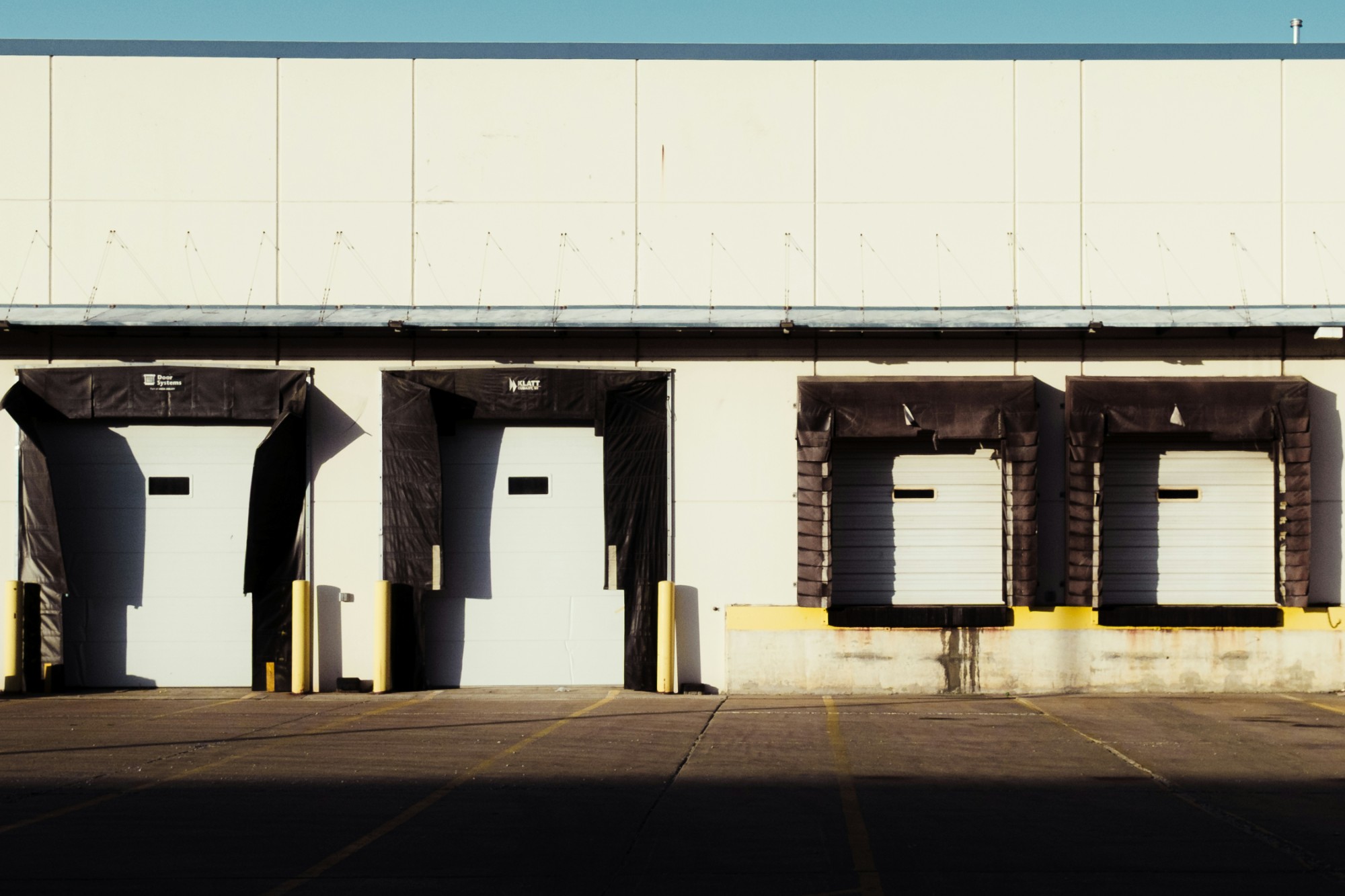
Loading-dock sectional doors live a brutal life. They cycle more than any other door in the building (trucks arriving every 15–30 minutes in heavy-flow facilities), they absorb impacts from forklifts, dock levelers, trailers backing in, and dock bumpers, and they operate in a space where downtime directly and immediately costs money (idle labor, missed appointments, perishable product at risk).
Dock-door-specific inspection items we add to standard PM:
- Bottom section panel condition (impact damage from forklifts and truck mirrors)
- Dock bumper condition and mounting (bumpers absorbing truck strikes transfer that force to the building envelope — replace worn bumpers before they stop absorbing)
- Dock seal/shelter condition (vinyl head curtains, side pads — when these fail they let weather in and signal that door envelope is compromised)
- Dock leveler operation and interlock (the dock leveler and door often share an interlock switch so the door can't close on the leveler; broken interlock is a crush hazard)
- Vehicle restraint integrity (ICC bar hook or rotating hook: safety device that prevents trailer creep during loading)
- Bollards / column guards at the opening (prevents forklift strikes to the door track — replace or repaint bent bollards)
High-Speed Roll-Up Doors: Different Maintenance Profile
Rytec Spiral, Rapid Roll, Albany, and similar high-speed fabric roll-up doors live and die by the condition of their fabric curtain, their wind bars (the horizontal stiffeners), and their drive mechanisms. They cycle at speeds up to 100 inches per second (20–25 cycles per minute at full tilt), so even a small issue amplifies into a failure fast.
High-speed PM additions:
- Curtain fabric inspection: tears, delamination, wind-bar bind points
- Wind bar condition: dented, bent, cracked (impacts from forklifts and passing vehicles are common)
- Wind lock alignment (cold-storage and hurricane-rated models)
- Motor brake check: high-speed doors use magnetic brakes that must stop the curtain cleanly at each cycle end
- Side-column cover / breakaway mechanism (prevents full operator damage when a vehicle hits the curtain)
- Photo-eye and safety light-curtain function test (high-speed doors run light curtains, not just a single photo-eye pair)
Documentation That Protects You
The piece most skipped on casual PM programs: paperwork. For commercial doors, written service records protect you across three fronts:
- Insurance claims. After a door failure that caused injury or property damage, your insurer will ask for the service history. Documented regular PM is the single strongest defense against premium increases or claim denial.
- OSHA / worker-injury investigations. If a worker is injured by a door, OSHA will investigate. A written PM record showing regular safety-device testing (photo eye, safety edge, reversal) is critical evidence that the facility exercised reasonable care.
- Fire marshal inspections. Annual drop tests on fire doors must be documented and available on site. No paperwork, written up at inspection.
Every Steward PM visit ends with a one-page service report emailed to the facility contact within 24 hours, plus a copy in our service portal. Multi-door accounts get a quarterly summary across all doors with trend data (cycle counts, parts replaced, open items).
The Steward Approach
We write commercial PM contracts starting at single-door Basic ($175/year) and scale through fleet-rate Premium contracts for 20+ door accounts across DFW. Every contract starts with a free walk-through audit of every door on the property — we read cycle counts, identify fire-rated doors needing NFPA 80 compliance, flag UL 325 gate issues (most commercial facilities have at least one access gate), and hand you a right-sized PM proposal with per-door pricing. See our commercial service page for the full scope.