Steel is one of the most temperature-sensitive materials in your home. Your garage door springs and cables are steel. Your opener has aluminum housing, steel gears, and plastic circuit boards — all sitting in an attached garage that regularly hits 115°F+ in July and August across DFW.
Here's what that does to your equipment — and what to do about it.
What Texas Heat Does to Torsion Springs
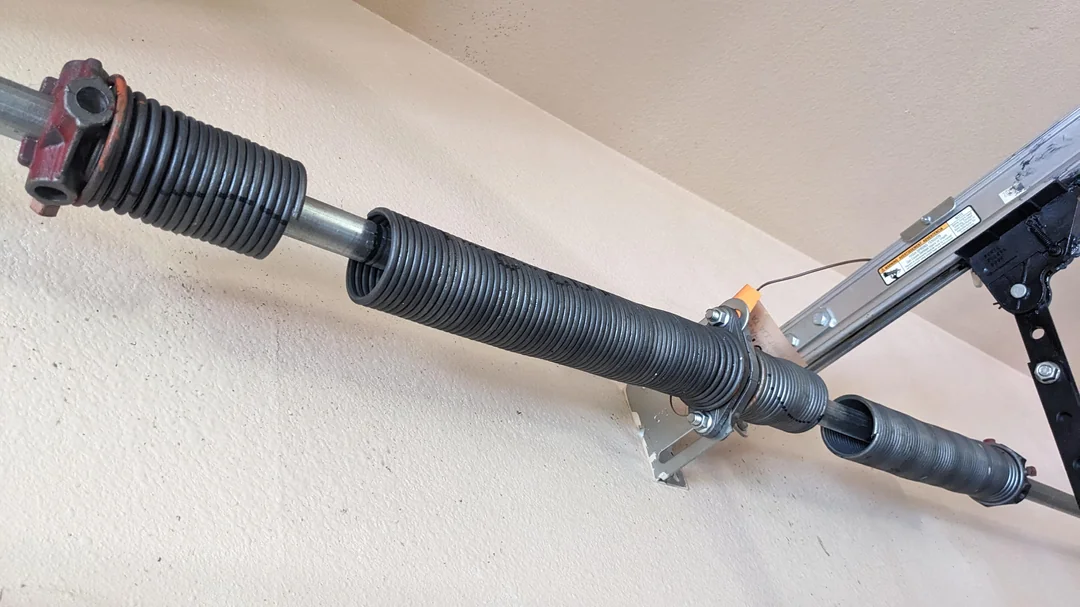
Torsion springs are cold-wound steel. Under normal DFW conditions, they last about 10,000–15,000 cycles (roughly 7–12 years for typical households). Heat accelerates two failure modes:
- Metal fatigue — each heating and cooling cycle expands and contracts the coil slightly. Over years, microcracks form.
- Lubrication breakdown — the factory oil on the coil evaporates faster in heat. Dry coils grind against each other and shed material.
Bottom line: DFW springs typically fail 20–30% earlier than the same spring in a milder climate. A 10,000-cycle spring rated for 12 years in Vermont often only makes 8–9 years in DFW.
What It Does to Cables
Steel cables have a lower failure temperature than springs, and they're exposed to the ambient garage air (springs are usually installed above the door but still in the same heated space). Heat + humidity in DFW summers creates surface rust that eventually cuts into the individual strands.
Prevention: apply a light oil (3-in-One or a specific cable lubricant) to the exposed length of both cables once a year. Not lithium grease — too thick.
What It Does to Openers
Openers mounted to the garage ceiling sit in the hottest part of the space. Real attic-adjacent installations regularly see 130°F+ during July afternoons. Effects:
- Capacitor failure — the #1 opener failure mode in DFW. Capacitors are rated for 105°C but they degrade under sustained heat. Symptom: opener hums but doesn't move the door.
- Logic-board failure — plastic solder joints crack under thermal cycling. Common in openers 12+ years old.
- Gear wear — plastic drive gears warp and shed teeth under high load in heat. Symptom: grinding noise on lift.
How to Protect Your Equipment
Lubricate Twice a Year
Spring and fall. Use white lithium spray on:
- The entire length of each torsion spring coil
- Every hinge (13–14 of them on a two-car door)
- Every roller stem (not the wheel itself — nylon rollers don't need it)
- The opener rail if it's a chain-drive (belt-drives don't need it)
Wipe cables with a light oil at the same time. Skip WD-40 — it strips existing lubricant.
Insulate Your Garage
Adding an insulated garage door (R-16+) reduces summer garage temps by 25–35°F. That drops attic-level opener temps from 130°F to closer to 100°F — more than enough to double opener lifespan. See our insulated door guide.
Add an Attic Fan
If your opener sits near an attic vent, powered attic ventilation drops peak temps significantly. Not a Steward install, but if you're already having an HVAC contractor out, worth asking.
Upgrade to High-Cycle Springs
Standard 10,000-cycle springs are the default. For DFW households, we recommend 25,000-cycle high-cycle springs for the ~$150 upcharge. They're wound with heavier wire and hold their tension longer through heat cycling.
Warning Signs a Spring Is About to Go
- Door feels heavier by hand than usual
- Opener grunts or slows on lift
- Visible gap in the spring coil (compare left and right)
- Door doesn't stay open at halfway when you disengage the trolley
- Rusty spots or paint flaking on the spring
Any of these = schedule a check before it snaps. Replacement while intact is a $250–$500 job. Replacement after failure is the same price but you also might need cables ($175+) if the shock load damaged them.
The DFW Lifespan Cheat Sheet
| Part | Rated lifespan | Actual DFW lifespan (heat-adjusted) |
|---|---|---|
| Standard 10K-cycle springs | 10–12 yr | 7–10 yr |
| 25K high-cycle springs | 20–25 yr | 15–20 yr |
| Lift cables | 10+ yr | 7–10 yr |
| Nylon rollers | 15–20 yr | 12–15 yr |
| LiftMaster opener | 20–25 yr | 15–20 yr |
| Genie opener | 15 yr | 8–12 yr |
An annual tune-up (part of our Care Plan) extends every one of those — usually by 30–50%.