
The Garage Is the New Front Door
About 9% of home burglaries in DFW enter through the garage, and the number climbs every year as more homes have attached garages with unlocked interior doors. Here are the 8 upgrades that actually change the odds.
1. Rolling-Code Opener (Non-Negotiable)
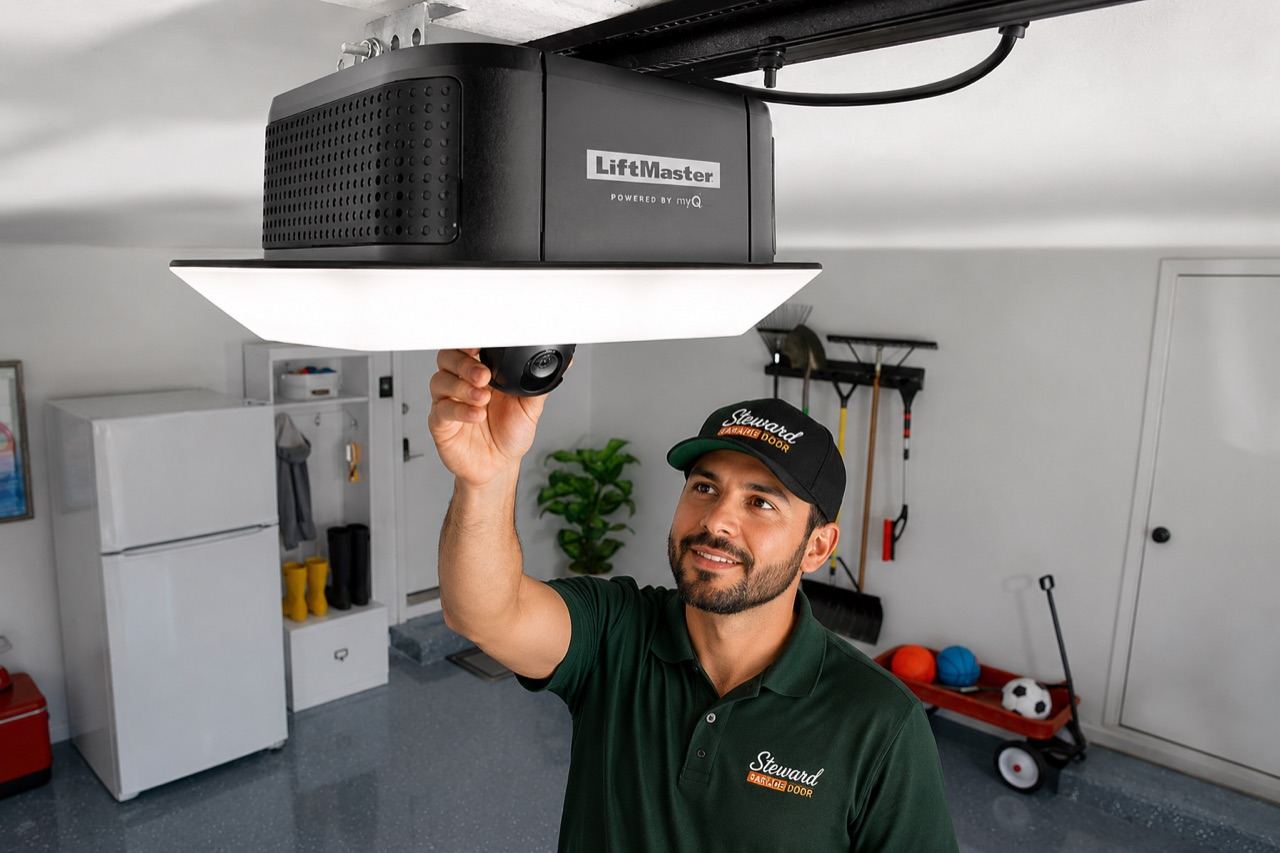
Any opener made before 1996 uses a fixed-code remote signal that can be captured and replayed by a $30 gadget. Modern openers use rolling code (LiftMaster's Security+ 2.0, Genie's Intellicode) that changes every button press. If your opener is 25+ years old, replace it — this is the single biggest security upgrade you can make.
2. Emergency Release Cord Shield
The red pull cord that disconnects your opener is a burglar's best friend. A thief can slide a coat hanger through the top weatherstrip, hook the cord, and pull to release the door manually. A Garage Shield ($20-$30) blocks this. Ten-second install, no tools needed.
3. Reinforced Interior Door
The door from your garage into the house is often a hollow-core door with a cheap deadbolt. Upgrade to a solid-core door with a Grade-1 deadbolt and 3-inch strike plate screws. This one upgrade turns your garage from an entry vector into a delay zone.
4. Motion-Triggered Interior Camera
Ring or Nest camera mounted inside the garage, aimed at the interior door and vehicles. Sends alerts on motion when you're away. Works even if the garage door itself is open.
5. Smart Opener with Alerts
myQ (LiftMaster/Chamberlain) or Aladdin Connect (Genie) will alert your phone when the door opens or stays open. Set an auto-close after 15 minutes so you never forget the door open overnight. Alerts on unexpected opens = burglary early-warning.
6. Cover the Windows
If your garage door has decorative windows at the top, burglars use them to see if cars are inside. Frosted window film ($15-$25 for a full door) blocks the view without changing the door's appearance from the outside.
7. Vacation-Mode Lock
The wall control has a vacation lock switch (or button on newer models) that disables all remotes and keypads. Flip it when you leave for a trip — even if a thief captured your rolling code, they can't open the door. Re-enable when you return.
8. Change the Keypad PIN
The exterior keypad PIN should be changed anytime a housekeeper, contractor, dog walker, or house-sitter has known it. Takes 60 seconds. Most homeowners never do it — and that's how ex-employees walk right into homes months later.
What Doesn't Matter
Skip: expensive 'smart locks' for the garage-to-house door (the deadbolt matters more than smart), decorative wrought-iron grilles that only slow the door (real burglars carry pry bars), and 'anti-lift' locks for the manual release (Garage Shield does the same job for $20).