A snapped torsion spring is the #1 emergency call we get in DFW — usually right after a cold snap or when a door hits its 10,000-cycle lifespan. If you just heard a loud bang from your garage and the door won't open, here's exactly what to do (and what NOT to do) while you wait.
What Just Happened
Your garage door is heavy — usually 150–250 lbs. The torsion spring above the door does 90% of the lifting; the opener just guides. When the spring snaps (the "gunshot in the garage" sound), all that weight now sits on the opener, the cables, and the door itself.
1. Do Not Run the Opener
Pressing the wall button now can burn out the opener motor, snap the lift cables, or bend the top panel of the door. If someone else in the house doesn't know about the spring, unplug the opener from the ceiling outlet until it's fixed.
2. Do Not Lift the Door By Hand
Without the spring's counterbalance, that 200-lb door will come crashing down. Even two adults can lose grip. This is the injury we see on emergency calls — pinched fingers, broken feet, worse.
3. Look for the Visible Break
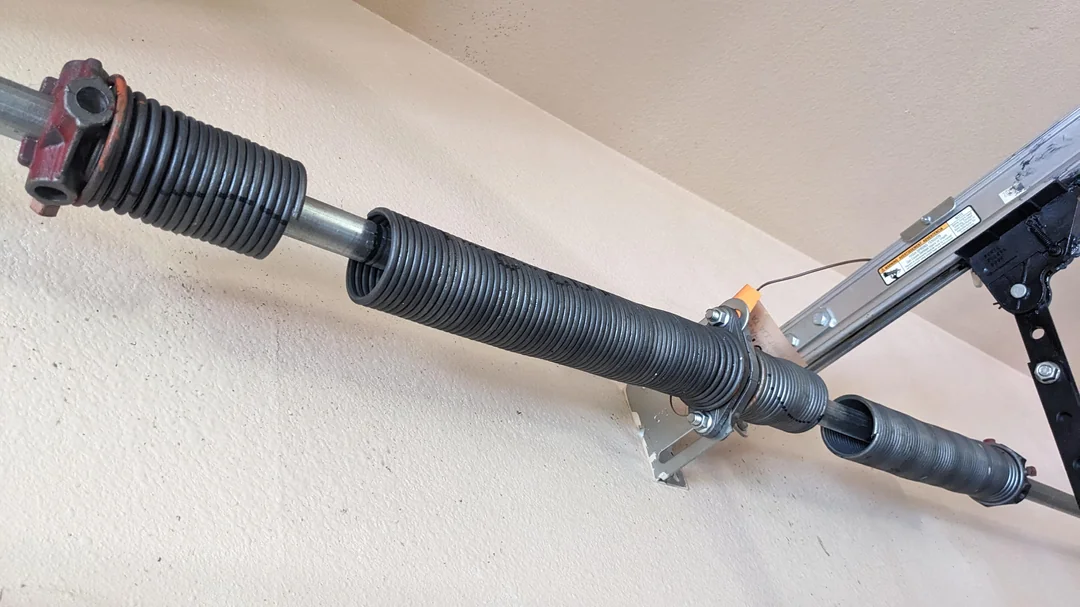
Walk into the garage and look at the torsion spring(s) above the door. You'll usually see a 1–2 inch gap in the coil where it snapped. Some doors have two springs — if only one broke, the other is close behind (we replace them in pairs, always).
4. Move Your Car If You Can
If your car is inside the garage and you need to leave: with three adults, you can carefully pull the manual release cord (red handle), lift the door about 2 feet, brace it with a broom handle or 2x4, drive out, and let it back down. Don't try this alone.
5. Call Now, Not Tomorrow
A broken spring isn't just an inconvenience — the door is a safety hazard until it's fixed. Most repairs are $250–$500 fully installed and take under an hour. See our DFW cost guide for exact ranges.
What We Bring on the Repair
- Matched-pair replacement springs sized to your door weight and wire gauge
- Fresh cables (they weaken with each spring failure)
- Winding bars and safety cones (the tools you can't safely improvise)
- Cycle-testing after install to verify the door is balanced
How to Avoid It Next Time
Standard 10,000-cycle springs last about 7–12 years in a typical DFW household (about 3–4 daily cycles). Households with teens or in-home workshops burn through them faster. When we replace, we offer a 25,000-cycle high-cycle upgrade for about $150 more — it usually doubles the service life. Also: lubricate the springs and hinges twice a year with lithium spray, not WD-40.
Why Springs Are Never DIY
Torsion springs hold 200–400 lbs of stored force. Wound wrong or released without proper cones, they can strip the shaft, embed in drywall, or break a wrist. It's the one repair the manufacturers themselves tell homeowners not to touch. Read why we always say no to DIY spring jobs.